

Awareness: The Opportunity to Replace Habit with Choice
July 7, 2026
Craniosacral Therapy Helps Restore Balance in an Inflamed Knee
August 7, 2026How Learning to Move Differently Relieved Chronic Neck Pain
One thing I enjoy most about the Feldenkrais Method is that every lesson teaches me something new.
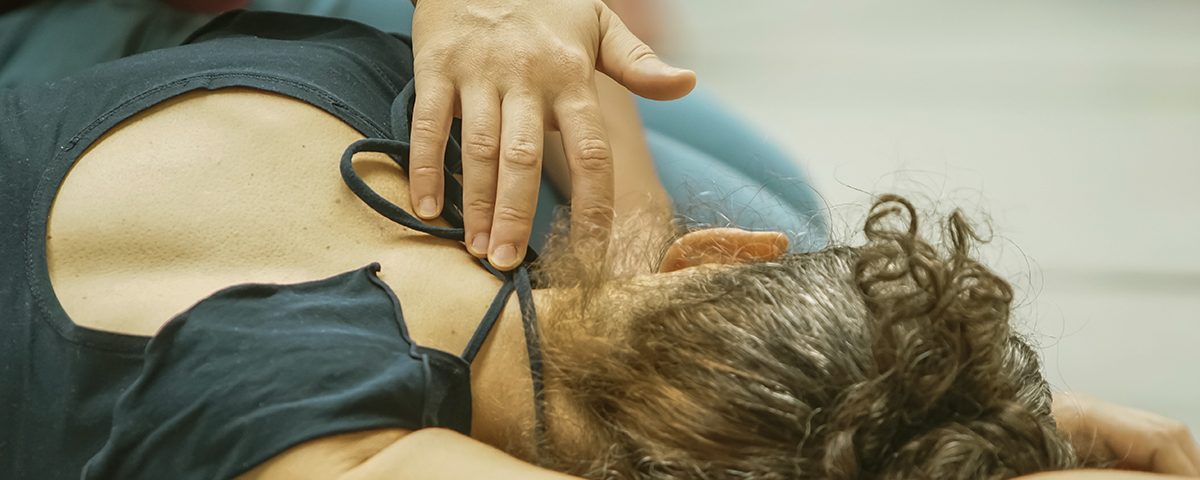
Recently, a client returned still experiencing pain at the base of her skull on the right side of her neck. Rather than focusing on the painful area itself, we began exploring gentle movements of her head, neck, and shoulders as she rested comfortably on the table.
As I observed her movement, something became clear.
Whenever she turned her head to the right, almost all of the movement was happening at the junction between her occiput and atlas—the base of the skull where it meets the first cervical vertebra. Instead of her entire neck participating in the movement, one small area was doing nearly all the work.
It’s a common pattern.
When one part of the body takes on more work than it was designed to do, other areas often become less involved. Over time, this creates unnecessary effort, stiffness, and eventually discomfort.
Through slow, gentle exploration, she gradually discovered another possibility.
Instead of hinging at the base of her skull, she began allowing the movement to be shared throughout her entire neck. Rather than forcing the movement, she learned to organize it differently.
Then another important realization emerged.
As she turned her head and upper body to the left, she noticed she didn’t need to contract the muscles on the left side to make the movement happen. Instead, she needed to do something much more difficult.
She needed to let go.
By releasing the unnecessary holding through the ribs and muscles on the right side, the movement became easier, lighter, and more complete. The effort wasn’t in working harder. It was in doing less.
This is one of the beautiful paradoxes of the Feldenkrais Method.
We often believe improvement comes from trying harder, stretching farther, or strengthening more. Yet many times the greatest change occurs when we stop interfering with the body’s natural organization.
Near the end of the lesson, she quietly said something that stayed with me.
“I think I’m learning to feel myself for the very first time.”
Not just her neck.
Not just the pain.
But her entire body.
She was beginning to sense how she moved, where she held unnecessary effort, and what it felt like to let go of those habits.
She described the experience as exciting, liberating… and a little scary.
After all, when you’ve spent years organizing yourself one way, discovering a completely different possibility can feel unfamiliar. Yet it also opens the door to change that doesn’t rely on force, but on awareness.
She left the session feeling a little dazed. Not because anything had been “fixed.” But because something in her nervous system had learned. Her brain had discovered a new way to organize movement.
That is what I find so remarkable about this work. Real, lasting change doesn’t always come from treating pain directly. Sometimes it comes from learning to move in a way that your body has been capable of all along.